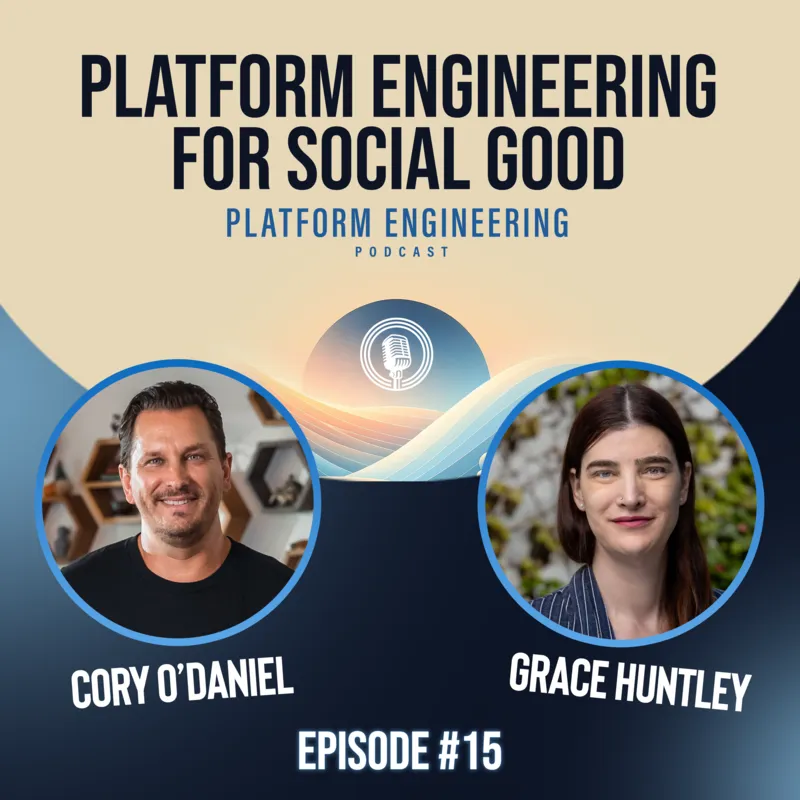
So what drove me into software was my daughter was born with severe epilepsy. Android phones were brand new and they had these sensors and I was very excited. So I'm like, well, maybe I can figure out how to write an app to kind of learn and predict seizures. So that was kind of where my journey started.
I taught myself Android, started writing the first app–it was horrible, but it kind of collected data, so that was great. And then I kind of transitioned. I got my first job, because I realized I had to pay my bills, and I gradually moved up.
I really like to solve problems and learn what I need to solve a problem. I consider myself a fast learner. And I've kind of jumped around. I've gone all the way up. I've decided to go back as an IC at PayPal just because I felt I was away from the baseline for too long. And how do I lead people if I don't know what I'm talking about? So I'm kind of back in this kind of growth scale.
As for my transition to Code for America, you know, I've interacted with them over the time. I've been a volunteer judge at a lot of hackathons and I've always interacted.
I had no idea what they were. And this was a point in my career where I decided I was going to start moving into doing good with my experience because I could also afford to at this point in my life. And this opportunity came across and I was like, yes, please, let me work on this stuff.
It's really close to heart, which I mean, again, my daughter with special needs. I personally have struggled getting like safety net benefits for my daughter, not knowing what was available, going through the application process. It took about 16 years for me to get all the things that are available to her. And now today, I get to spend every day making it easier for others so they don't have to wait 16 years.
Yeah, you know, it's quite interesting. There's multiple aspects to it.
One is, you know, with an organization like PayPal, we typically have a lot of money and with everything we do, we make more money. So, you know, we can kind of like play with things. We can buy the most expensive thing off the shelf, if need be, to get these out the door.
Whereas, you know, the combination of working in nonprofit and with government…So nonprofit, obviously we are tight, we don't have all this extra money. Every bit of money we have, we spend on solutions to help people. But on the other side of the story, a lot of government systems are dated. I'll be nice, I will say dated. With us having to interact with kind of these older systems, right, we do our best to meet them where they're at. But at the same time, we are always trying to find opportunities and influence to advance and kind of bring them closer to their future.
So we have to kind of wrap ourselves around the fear aspect about new technology. You know, I'm sure we'll talk later about AI. There's a lot of fear around it, especially in government, which is understandable–bias, et cetera, privacy. So we kind of have to really
show them what we can do at the lowest level of technology. Then we have to try to figure out how to introduce higher levels of technology.Do we create gateways? So like we can have this modern stuff touching the old, which is definitely interesting.
There's a lot more thinking than doing in this world. We can't really just kind of hack away at a problem and then put it on paper after. We're kind of the opposite.
Sometimes we do handoff work - we build prototypes, we hand it to the government. So a lot of times we'll try to build it in the language of their choice. Like who do they have the most resources for? Which more often than not are not necessarily our favorite languages, but we do what we can to kind of get in the door and kind of make proof of concept.
Yeah, you know, it's definitely interesting. And honestly, it's the biggest top of mind thing for me right now. Because we work with so many different state, federal…we have so many different compliances. We have things like NIST, we're going for SOC 2, some states have a subset with an expansive set of compliance very specific to the state. And there's just so many areas that we're trying to understand.
So, as part of my joining, I've been trying to simplify and restructure compliance to make it kind of its own position, its own role. And then figuring out how we optimize and simplify compliance.
One of the experiments we're working on is like, how do we look at all of the most common compliance models or frameworks that we would ever encounter? And what is the one list of things that would really kind of check off most boxes? And we're starting to kind of build in that philosophy.
And then we're also kind of looking at IAC and automation. As we move into microservices, the concept is we really cut down on the complexity of a solution. Like, say this is a function that uploads a document, right? In a dream world, I could say to an AI chat bot, I want to build this document uploader that does this, this, this, this, and this. And automatically we're going to pull in all the policy documents into this folder. It's going to be stamped with this service. It's going to wrap the service. The IAC scripting is actually going to build this in a compliant manner. By doing things like that, it actually lets us scope lower. It also lets us realize if there's changes in compliance, we can go back and look at the smaller piece without going through 10,000 documents or, you know, a full review.
So we're trying to break it down into smaller pieces and spread it out. But also identify how can we do it once and solve it all? Because it's a huge… like it's a full-time job, compliance, especially working in these different areas.