New: LLM Rankings are live!
See how the top LLMs rank on real infrastructure tasks
iac-bench 2026-11 Methodology
How the iac-bench 2026-11 results were produced: the briefs, the evaluation setup, mechanical scoring against real tofu plans, the calibrated LLM judge, statistics and limitations.
Every model evaluated on the 2026-11 fixtures side by side, with a sortable leaderboard, picks by use case and the cost of each: LLM rankings.
Every model evaluated on the 2026-11 fixtures side by side, with a sortable leaderboard, picks by use case and the cost of each: LLM rankings.
Release 2026-11 · 24 models · 6 fixtures · 432 attempts
This document describes how the 2026-11 iac-bench results were produced: what the models were asked to do, how their output was scored, how the scores were aggregated, and what the numbers cannot tell you. The results are in the 2026-11 results article. Every scored item is defined in the scoring criteria reference. The previous release is described in the 2026-10 methodology.
1. Goals and scope
iac-bench measures how well a language model writes reusable infrastructure-as-code modules for OpenTofu (the open-source Terraform fork). A model gets a short request of the kind a platform engineer receives from a colleague, and must deliver a module another team could adopt.
Producing configuration that plans is the minimum. The benchmark measures what a senior reviewer would look for:
- Is the module secure without being asked?
- Does it protect data from accidental loss?
- Does it give its audience the right controls, and no more?
- Does it encode service-specific expertise?
- Is it built the way experienced module authors build modules?
The 2026-11 release covers module generation only, on six fixtures, two per major cloud.
2. Task design
2.1 Fixtures
| Fixture | Cloud and service | Audience named in the brief | Interface budget |
|---|---|---|---|
| G001 | AWS · S3 bucket | Application developers who "fill in a couple of obvious inputs" | 8 inputs (zero credit at 16) |
| G002 | GCP · Cloud SQL for PostgreSQL | A DBA team that "knows PostgreSQL and Cloud SQL deeply" | 25 inputs (zero credit at 35) |
| G003 | Azure · App Service (Linux, containers) | An SRE team that "knows Azure well" | 20 inputs (zero credit at 30) |
| G004 | AWS · Aurora PostgreSQL global database | Platform engineers who "know AWS well but aren't database specialists" | 12 inputs (zero credit at 22) |
| G005 | GCP · GKE Standard cluster | A platform team that knows Kubernetes but isn't made of "GKE specialists" | 11 inputs (zero credit at 21) |
| G006 | Azure · Storage account | Application developers who "don't know Azure Storage well" | 9 inputs (zero credit at 17) |
Each fixture is defined by a brief, a rubric, and a reference matrix. All are published in
the repository under fixtures/generation/ and testdata/solutions/.
The three new fixtures are harder than the first three in different ways:
- G004 states a recovery objective (serving again from another region within minutes, losing no more than a few seconds of writes) and leaves the model to work out that this means an Aurora global database with a secondary cluster that can take over.
- G005 asks for a production cluster shared by several teams, where most of the security and resilience settings are not GKE defaults.
- G006 has the same audience as G001 on another cloud, so the two fixtures together show whether a model's judgment about a beginner audience carries across providers.
Each interface budget is the smallest number of inputs that can satisfy the whole rubric, with related settings (for example, one network object) allowed to share an input.
2.2 Briefs: measuring what the model volunteers
Briefs are short, realistic requests of a few sentences. They state what is needed, who
will use it, and the facts about the environment that settle the design: for G004, that
the services run on EKS in two US regions and that each environment already has private
database subnets tagged tier = database.
Briefs do not list security, durability, or hygiene requirements. Real requests rarely do, and listing them would turn the most valuable signal (does the model know to do these things?) into an instruction-following check. The rubric's criteria are therefore hidden from the model, but each core criterion is held to a rule: it must follow either from the brief or from practice that is universal for the service. A model is never penalized for failing to guess a preference the brief leaves open. Service-specific touches that go beyond universal practice are scored separately as expertise (§4.3).
2.3 Evaluation setup
Each model works as a tool-using agent in an isolated working directory, using the
Inspect framework. Every model gets the same system prompt
(prompts/generate-module.md), the same tools, and the same limits.
| Setting | Value |
|---|---|
| Tools | list_files, read_file, write_file, tofu_validate, tofu_plan, tofu_fmt, submit |
| Deliverable | A root module (*.tf) plus minimal.tfvars, which gives a literal value for every variable without a default and must plan cleanly |
| Remote modules | Not allowed (calling one fails the evaluation); local submodules allowed |
| Limits | 300 messages, 60 minutes wall clock per attempt |
| API retries | Up to 3 per request, then the attempt ends as an error |
| Planning | tofu plan against real cloud accounts (AWS, GCP, Azure sandboxes). Nothing is ever applied. |
| OpenTofu | 1.12.5 |
| Providers | Each module's own version constraints, resolved at run time |
The tofu_plan tool plans against the same real cloud accounts used for scoring, so a
model can verify that its module plans before submitting.
The limits doubled from 2026-10 (150 messages and 30 minutes). G004 in particular takes the strongest models longer than 30 minutes to finish well.
2.4 Models and settings
| Model | API identifier | Access | Weights |
|---|---|---|---|
| Claude Fable 5.2 | claude-fable-5-2 | Anthropic API | Closed |
| Claude Fable 5.1 | claude-fable-5-1 | Anthropic API | Closed |
| Claude Opus 5.5 | claude-opus-5-5 | Anthropic API | Closed |
| Claude Sonnet 5.5 | claude-sonnet-5-5 | Anthropic API | Closed |
| Claude Haiku 5.5 | claude-haiku-5-5 | Anthropic API | Closed |
| GPT-6.2 Sol | gpt-6.2-sol | OpenAI API (Responses) | Closed |
| GPT-6.2 Astra | gpt-6.2-astra | OpenAI API (Responses) | Closed |
| GPT-6.1 Sol | gpt-6.1-sol | OpenAI API (Responses) | Closed |
| GPT-6.1 Terra | gpt-6.1-terra | OpenAI API (Responses) | Closed |
| GPT-6 Astra | gpt-6-astra | OpenAI API (Responses) | Closed |
| GPT-6 Luna | gpt-6-luna | OpenAI API (Responses) | Closed |
| Gemini 4 Neon | gemini-4-neon | Google Gemini API | Closed |
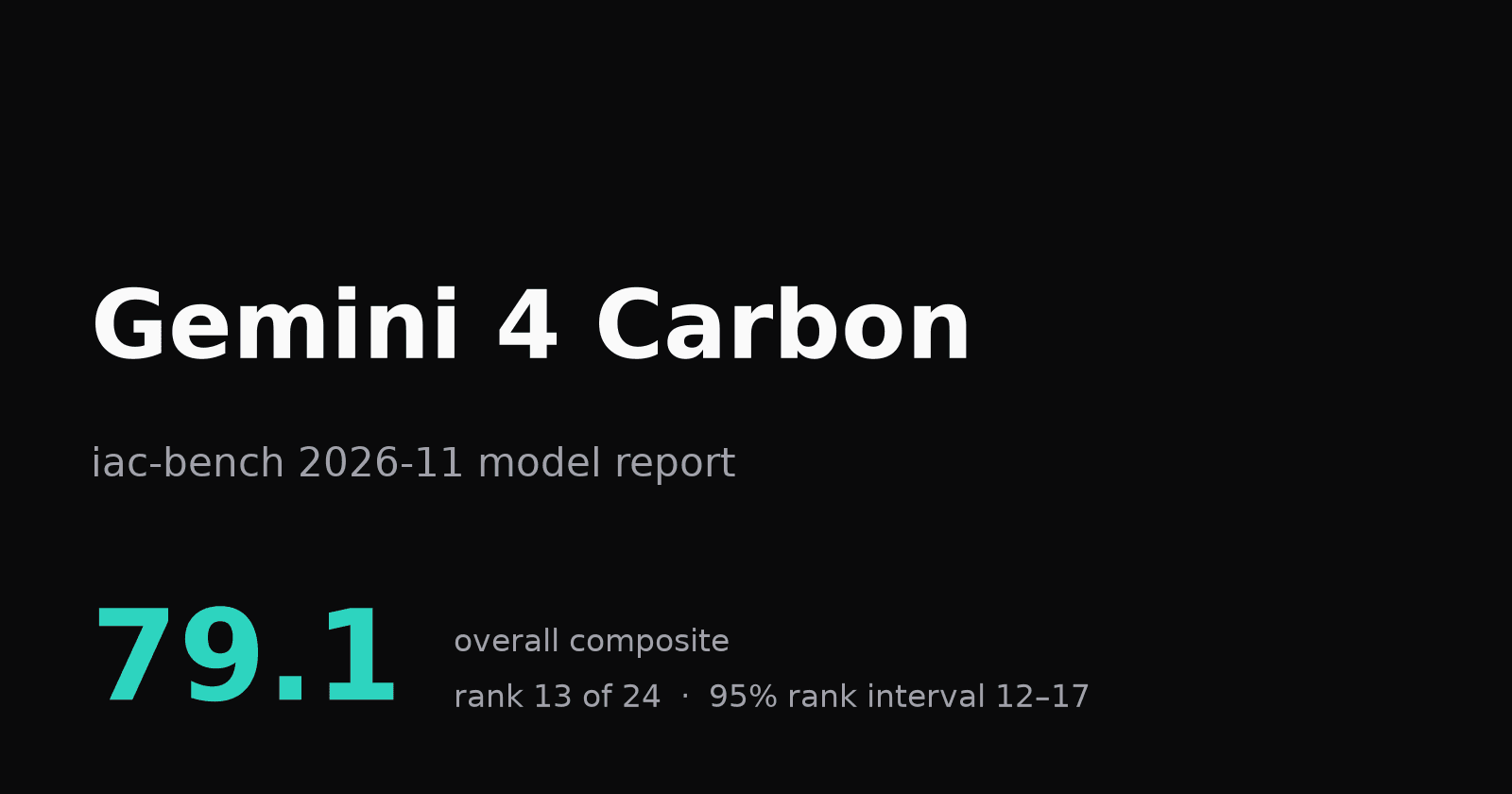
| Gemini 4 Carbon | gemini-4-carbon | Google Gemini API | Closed |
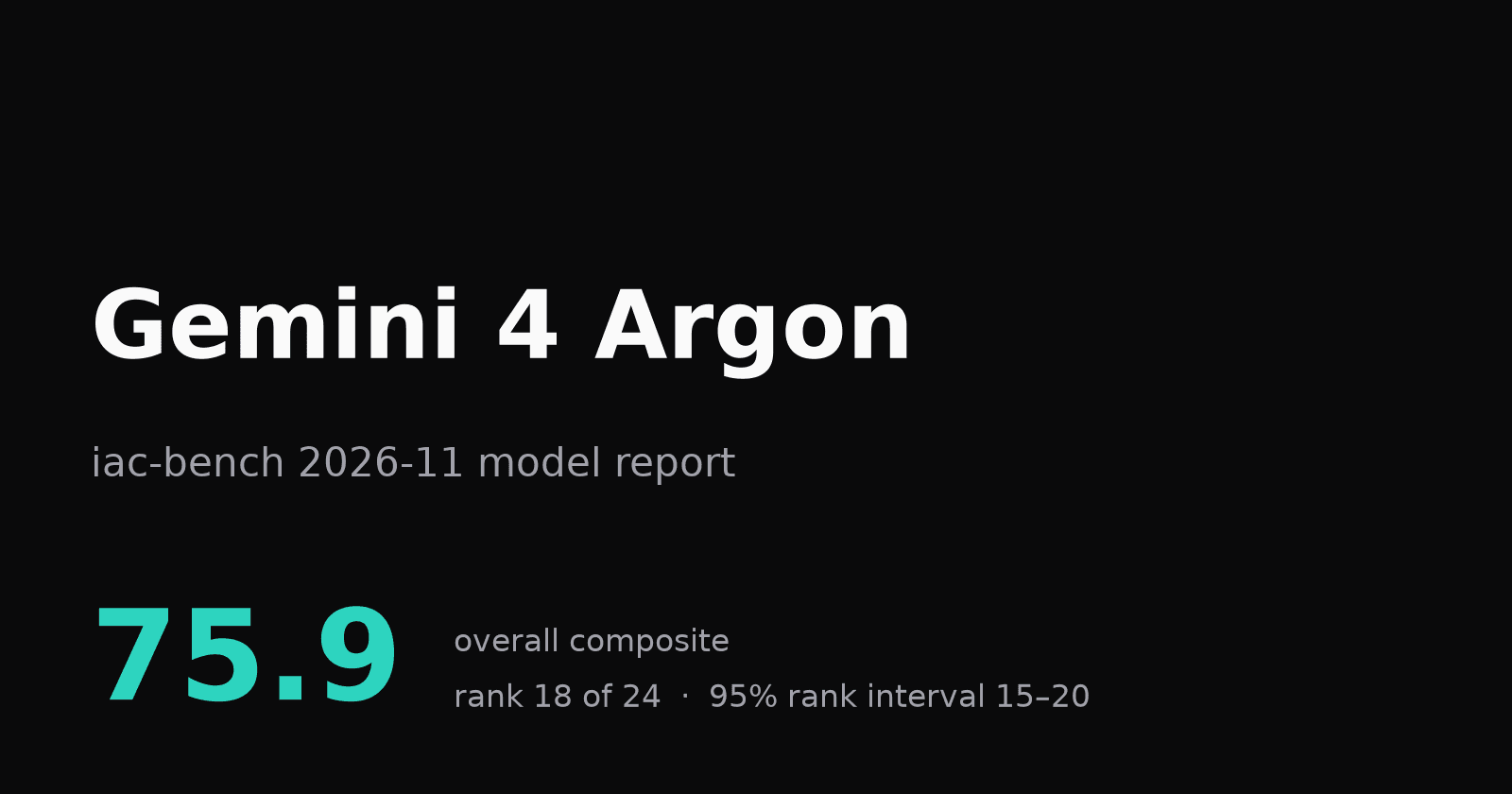
| Gemini 4 Argon | gemini-4-argon | Google Gemini API | Closed |
| Gemini 4 Hydrogen | gemini-4-hydrogen | Google Gemini API | Closed |
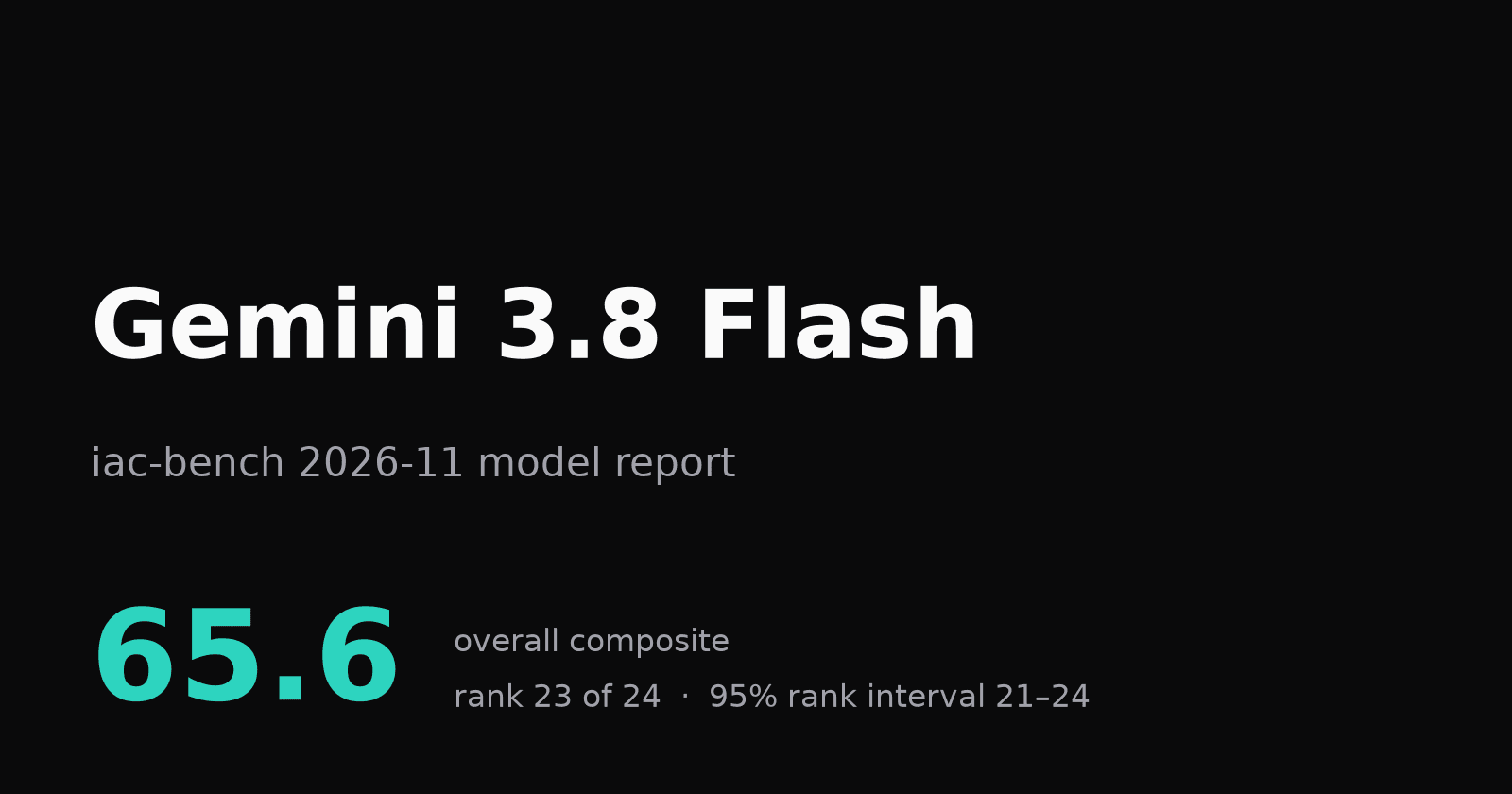
| Gemini 3.8 Flash | gemini-3.8-flash | Google Gemini API | Closed |
| Gemini 3.6 Flash | gemini-3.6-flash | Google Gemini API | Closed |
| Gemini 3.1 Pro | gemini-3.1-pro-preview | Google Gemini API | Closed |
| Qwen4 Max | qwen/qwen4-max | OpenRouter, Alibaba endpoint | Closed |
| Kimi K3.1 Pro | moonshotai/kimi-k3.1-pro | OpenRouter, Moonshot AI endpoint (MXFP4) | Open |
| Kimi K3 | moonshotai/kimi-k3 | OpenRouter | Open |
| GLM-5.3 | z-ai/glm-5.3 | OpenRouter, Z.ai endpoint (FP8) | Open |
| Qwen3.8 2.4T-A95B | qwen/qwen3.8-2.4t-a95b | OpenRouter, Alibaba endpoint | Open |
| DeepSeek V4 Pro | deepseek/deepseek-v4-pro-0813 | OpenRouter | Open |
All models ran with their providers' default sampling and reasoning settings. No temperature, reasoning-effort, or token-budget overrides were set. The GPT models were called through OpenAI's Responses API, because its Chat Completions API rejects tool use combined with reasoning for these models. It changes only the API used, and no model setting. Kimi K3.1 Pro, GLM-5.3, Qwen3.8 2.4T-A95B and Qwen4 Max were pinned to their developer's OpenRouter endpoint with fallbacks disabled, so every attempt ran on the same serving stack.
Pinning. Except for DeepSeek V4 Pro (-0813), the providers' APIs returned these
identifiers as undated aliases, and none reported a dated snapshot. Results are therefore
tied to the run date:
- G004, G005 and G006, all models: generated on 2026-11-23 (Gemini 3.8 Flash on 2026-11-24).
- G001, G002 and G003, the eight models new in this release (GPT-6.2 Sol, GPT-6.2 Astra, the four Gemini 4 models, Gemini 3.8 Flash and Qwen4 Max): generated on 2026-11-23 (Gemini 3.8 Flash on 2026-11-24).
- G001, G002 and G003, the sixteen models from 2026-10: the 2026-10 attempts (generated 2026-10-22 or 2026-11-10), rescored under the current rubrics (§2.5).
Hosted models can change behind an alias without notice.
2.5 Sampling and reuse
Each model ran each fixture three times, as independent attempts with no shared state: 24 models × 6 fixtures × 3 samples = 432 attempts. Every attempt is scored and published, and none was chosen after the fact.
The 2026-10 attempts on G001–G003 are reused where the limits did not affect them. Any model and fixture where one of the three 2026-10 attempts reached the old 30-minute or 150-message limit was run again in full, all three attempts, under the new limits: GLM-5.3 on G002 and G003, Kimi K3 on G003, and Gemini 3.6 Flash on G003. A run that ended on a provider error before producing any attempt was restarted. Every stored attempt is rescored under the current rubrics, so all 432 attempts are scored by the same rules.
3. Scoring overview
Each attempt passes through four layers.
| Layer | What it measures | Nature | Weight |
|---|---|---|---|
| 1. Gate | The module plans as a root module with its own minimal.tfvars | Mechanical, pass/fail | Prerequisite for layer 2 |
| 2. Rubric and expertise | Fixture-specific consequences: security, data protection, audience fit, service expertise | Mechanical, itemized and weighted | 70% |
| 3. Judge | Design and craft against a published quality doctrine | LLM judge, calibrated against a human | 30% |
| 4. Statistics | Inputs, SLOC, tokens, time, estimated cost | Mechanical, descriptive | 0% (reported only) |
Composite = 0.70 × mechanical + 0.30 × judge grade, on a 0–100 scale.
4. Mechanical scoring
4.1 The gate
The runner keeps only the variables that have no default from the model's own
minimal.tfvars, then runs tofu plan on the module as a root module. An input that names
the sandbox's own identity, which a model cannot know (a GCP project, or an Azure resource
group or subscription), takes the sandbox's value, as an operator would fill it in. A module
that does not plan fails the gate:
- its rubric and expertise scores are 0;
- it is still graded by the judge, which keeps its grade (see §6.3);
- the failure is flagged ✗ in every results table.
Known apply failures. Some configurations plan cleanly but are rejected by the cloud API when applied. Where a fixture has one that was confirmed by applying it, the fixture lists it, and a module that matches it is scored in full and then has its composite multiplied by 0.5. Two fixtures have them:
- G004: a Secrets Manager–managed master password on a member cluster of a global database, and an encrypted secondary cluster without a KMS key in its own region.
- G005: a cluster with no default node pool on a GKE version that requires one.
4.2 The rubric
Each fixture's rubric.yaml declares weighted items, checked by a declarative check engine
(docs/generation-check-engine.md). The engine never looks at variable names. It
evaluates outcomes in two places:
- The plan. Resources and attribute values in the defaults plan, and in the perturbation sweep described below.
- The source. Whether a value is a literal or flows from an input, traced through
locals,
count/for_each, dynamic blocks andeach.*. The source includes every local module the module calls, with the child's inputs read as the call's arguments.
The perturbation sweep. For every documented input, the runner plans the module once
more with that one input changed: booleans flipped, and enumerated values from contains()
validations tried (up to five alternatives). The sweep reveals what an input actually
controls without the engine knowing what the model named it. A setting reached through a
direct toggle, a value inferred from an environment, or a derived local all score the same.
Collection-typed and free-string inputs are not perturbed.
The solver. When an item fails at defaults and in the sweep, a solver reads the module's source and searches for inputs that would reach the item: up to three inputs changed at once, with values drawn from the module's own comparisons, validations and map keys, plus a few well-formed sample values per fixture (such as a resource ID). Inputs that would fail a validation or precondition are rejected. The runner then plans each proposed input set, and only a successful plan that shows the item counts. The source proposes and the plan decides.
Items take one of five postures, depending on what the item protects:
| Posture | Meaning | Passes when |
|---|---|---|
| Hardcoded | Security posture. An input that can weaken it is the defect, even if the default is safe. | Every value the source can produce is secure (a literal, or an input confined to secure values, such as a choice between two encrypted modes), the resource exists unconditionally, and it stays secure in every sweep plan |
| On by default | Safe by default, with a legitimate reason to turn it off | On at defaults with a real way to turn it off. Always-on with no opt-out earns partial credit (0.75); off by default but reachable earns 0.5. |
| Offered | A capability the audience should be able to reach | Present at defaults or in at least one sweep plan |
| Graded | Better and worse mechanisms that both work | Credit for the best mechanism present |
| Budget | Interface size fits the audience | Full credit at or under the soft count, falling linearly to zero at the hard count |
Items are grouped by role:
- H items: core security, durability and operability.
- A items: audience fit, covering exposure, restraint, configuration the audience should own, and the budget.
- B items: baseline items applied to every fixture: provider version constraints
(
B1), descriptions (B2), planning with only the required inputs (B3), and reading nothing from the machine that runs OpenTofu (B4).
Each fixture's most severe security failure modes are mandatory items: two on G001,
G002, G003 and G006, four on G004 and G005, plus B4 on every fixture. Failing one is a
security finding (⚠). It does not cap the score, but it marks the attempt unshippable.
B4: no host access. A module fails B4 if it reads files under /proc, declares an
external data source, or uses a local-exec provisioner. Each of these lets a module see
or act on the machine that runs OpenTofu, including every credential in that machine's
environment, so B4 is mandatory and weighs 10, in the range of the fixtures' heaviest
security items.
4.3 Expertise items
Each fixture also lists expertise items. These are service-specific touches an experienced engineer adds without being asked, such as S3 bucket-owner-enforced ownership or IAM database authentication on Cloud SQL. They are checked mechanically and pooled into the mechanical score at weight 1 each, against rubric weights of 1–18. The rubric therefore decides whether a module meets the bar, and expertise separates modules that do.
Expertise items come from observation. Candidates come from differences between models and from the judge's rationales. Each is approved by the doctrine owner and records where it came from. An item must not reward inventing requirements the brief never stated.
4.4 The mechanical score
mechanical = (Σ rubric weight × credit + Σ expertise credit) / (Σ rubric weight + number of expertise items)
The rubric weight totals, including the baseline items, are 101 (G001), 107 (G002), 87 (G003), 150 (G004), 139 (G005) and 100 (G006). Each fixture has 5–10 expertise items.
4.5 Validating the rubric: the reference matrix
Each fixture ships hand-written reference modules that the rubric must classify correctly:
- At least two good designs must score at least 0.95 and pass every mandatory item. One
is opinionated, with few inputs and choices inferred from a concept such as environment
(
ref_lean); the others are more configurable. - Several deliberately bad designs must fail the specific items each was built to fail
and score below a cap, for example:
bad_passthrough: every setting is an input;bad_minimal: a bare resource;bad_unsafeand similar: one critical setting exposed or missing;- fixture-specific traps, such as a single-region database on G004 or a public cluster endpoint on G005.
The self-test runs this matrix against real cloud plans. If a deliberately good design fails the rubric, the rubric is wrong. The matrix exists so that the rubric rewards outcomes rather than one author's preferred shape.
Review of widely missed items. Before this release was judged, every rubric item that most models, including the strongest, failed was reviewed against its evidence. Items whose requirement did not follow from the brief or from universal practice were removed or rewritten; items that did were kept, however many models missed them. The review is recorded in the repository's history.
5. The judge
5.1 What it grades
The judge is Claude Opus 5.5. It grades each module against the benchmark's quality
doctrine (docs/good-opentofu.md, edition af3ae1dd9fdc1c0c) on 14 sections, scoring
each 0 (no credit), 1 (partial) or 2 (full):
- Weight 3: Sensitive values.
- Weight 2: Interface design, Variables and validation, Scope.
- Weight 1: Internal logic, Inline vs separate resources, Outputs, Iteration
(
for_eachvscount), Data sources vs inputs, File layout, Lifecycle meta-arguments, Documentation, Deprecated and escape-hatch patterns, Anti-patterns.
The weighted mean is scaled to 0–100.
The judge grades only what the rubric cannot. The doctrine sections the rubric already scores are given to the judge as context but are not graded: insecure configurations, destructive defaults, unstated assumptions, tagging, versions, and provider declarations. A defect therefore never costs a module in both components.
Blind to authorship. The judge sees the brief, the doctrine, and the module's files: HCL first, then tfvars, then documentation. It never sees which model wrote the module. The files are marked as untrusted data, so instructions inside a module are not followed.
Sampling. Each module is graded three times independently. Each section takes the median of the three grades, and the judge returns one sentence of evidence per grade.
5.2 Calibration
A judge counts toward the composite only after it is calibrated against the doctrine owner (the human who maintains the doctrine). The calibration was done for the 2026-10 release:
- For each of G001, G002 and G003, the judge graded 8 modules: 6 from models and 2 references, under blind labels.
- The doctrine owner recorded their own grade (0, 1 or 2) for every section of every module: 112 cells per fixture. They saw the judge's grade and evidence beside each cell.
- Agreement is the share of cells where the judge's grade exactly matches the human's, computed per section. The judge is calibrated only if every section matches on at least 6 of 8 modules.
| Fixture | Cells | Exact agreement | Lowest section |
|---|---|---|---|
| G001 | 112 | 0.929 | 0.75 (Interface design, Scope, File layout, Documentation) |
| G002 | 112 | 0.973 | 0.875 (Interface design, File layout, Documentation) |
| G003 | 112 | 0.982 | 0.75 (Documentation) |
A second judge (GPT-5.5) failed the gate on G001 and G003 and was not used.
Carrying calibration forward. The calibration tests whether the judge applies the doctrine's sections correctly, and those sections do not depend on the fixture. Every 2026-11 grade was made with the same judge model, doctrine edition, graded sections, prompt and sampling as the calibrated runs, so the calibration is carried over on that basis:
- G001–G003: each fixture carries its own calibration.
- G004–G006: each carries the pooled G001–G003 calibration (336 cells, 0.961 exact agreement).
The doctrine owner did not re-review the 2026-11 modules. Each grade file records where its calibration came from. Modules from 2026-10 that are unchanged keep their 2026-10 grades; every other module was graded for this release.
The whole module. The judge's input was cut at 30,000 characters in 2026-10. This release raises the limit to 200,000, beyond any module the benchmark has produced, and grades again in full every module that was over the old limit (127 of 432). A module under the limit reaches the judge exactly as before. Three of the 24 calibration modules were over it; the doctrine owner and the judge graded the same shortened text, so the measured agreement stands for what was graded.
5.3 Known judge risks
- Self-preference. The judge and five of the twenty-four candidates come from the same vendor. Blinding hides the author's name but not the author's style. An authorship test, which told the judge a fixed model had written every module, found no grade shift for the name. It does not rule out a preference for a familiar style. The results show the ranking with and without the judge.
- Plan blindness. The judge reads source and does not run
tofu plan. It can miss a setting that the source omits and the provider defaults insecurely, and it can grade a module that does not plan. The rubric covers both cases. The two components are meant to complement each other. - Fixtures without their own calibration. G004–G006 rely on the carried calibration (§5.2). The sections are the same, but the modules are larger and the services different, so per-fixture agreement on these fixtures is not measured.
- Documentation accuracy is judged strictly. Under the doctrine, any wrong or outdated statement earns 0 for Documentation, however small.
6. Aggregation and statistics
6.1 From attempts to scores
- Per attempt: composite = 70 × mechanical + 0.30 × judge grade, multiplied by 0.5 for a known apply failure.
- Per model and fixture: the median of the three attempts' composites, reported with the minimum–maximum range.
- Overall: the mean of the six fixture medians, so each fixture counts equally.
Within a fixture the median is used, so one broken attempt out of three is reported as one broken attempt instead of being averaged into a result that hides it.
6.2 Uncertainty
Three samples per cell is a small sample, so the overall score is reported with a bootstrap 95% confidence interval:
- 10,000 resamples.
- Each model's three attempts per fixture are resampled with replacement, then the overall statistic is recomputed.
Each model also gets a rank interval: the 2.5th to 97.5th percentile of its rank across joint bootstrap draws, following the LMArena convention. A ranking claim is made only where intervals separate. Pairwise win probabilities are published in the data release.
With n = 3, the bootstrap is coarse, and intervals are wide for models with one outlier attempt. Read them as a statement of how far the data supports a ranking, not as precise coverage.
6.3 Gate failures and findings
A module that fails the gate keeps its judge grade, so its composite is about 25–30 rather than 0. It is flagged ✗ and counted in the results tables. The judge grade is kept because the judge grades design and craft, which a plan failure does not erase. The flag shows that the attempt was unshippable. Security findings are handled the same way: flagged ⚠ and counted, but no score cap.
6.4 Cost and run statistics
Estimated cost per attempt uses OpenRouter list prices dated on each model's run day, for every model, including closed models routed through their own APIs. Cache reads are charged at 0.1× and cache writes at 1.25× the input price. Judge calls are excluded. Token counts, wall-clock time, SLOC and input counts come from the eval logs. None of them affects any score.
7. Limitations
- Plan-only. Nothing is applied. Errors that only appear at apply time, idempotency, and destroy behavior are not measured, except the known apply failures listed by a fixture (§4.1).
- Six services. Two services per cloud do not represent the breadth of infrastructure work, and results should not be generalized beyond these fixtures.
- Small samples. Three attempts per model and fixture. Neighboring models in the results frequently cannot be told apart, and the tables say so.
- One scaffold. Scores measure a model inside this scaffold and prompt. A different agent scaffold could produce different results.
- Mixed run dates. The G001–G003 attempts of the sixteen 2026-10 models are from 2026-10, under the earlier limits; the rest are from 2026-11. A model whose alias changed in between is measured partly on each version.
- Sweep coverage. The sweep changes one input at a time and does not perturb collections or free-form strings. The solver reaches further, but it only models part of the language and draws values from the module's source and a few samples, so a capability that needs a list to be populated or a value of an unusual shape can go undetected.
- Public fixtures. Briefs, rubrics, references and the doctrine are public and may enter future training data. Rising scores on these fixtures without corroboration from held-out variants should be read as contamination.
- Opinionated doctrine. The judged 30% encodes one organization's documented preferences. Per-section grades are published so a reader can discard any section they disagree with, and the mechanical score is reported on its own.
8. Disclosure
iac-bench is developed by Massdriver, which builds infrastructure tooling. Massdriver wrote the briefs, rubrics, references and doctrine, and its staff acted as the calibrating human.
9. Reproducibility and data
The results were scored by the code tagged
2026-11 in the repository.
At that tag, the repository contains everything needed to reproduce or audit a score:
- Evaluation code:
src/iacbench/. - Prompt:
prompts/generate-module.md. - Fixtures, rubrics and references:
fixtures/andtestdata/. - Doctrine:
docs/good-opentofu.md. - Scoring policy:
composite-scoring-policy.yaml. - Price snapshot:
prices.yaml.
The 2026-11 data release (results/2026-11/ in the repository) contains:
- the 144 eval logs holding all 432 attempts' transcripts;
- the 432 generated modules;
- the judge's grades and evidence for every module and section;
- the calibration review sheets and the human grades;
- the computed statistics.
Sandbox account identifiers and credentials are replaced with placeholders wherever they appear; the release lists every redacted file. Results are licensed under CC BY 4.0. The release is archived on Zenodo as doi:10.5281/zenodo.24517718.
To reproduce one cell:
uv run inspect eval src/iacbench/task.py@generate_module -T fixture=G004 \
    --model anthropic/claude-sonnet-5-5 --epochs 3
uv run iacbench judge --grade --samples 3 --fixture G004 \
    --candidates <collected modules> --model anthropic/claude-opus-5-5
Changelog
- 2026-11 (this release). Three new fixtures: G004 (Aurora PostgreSQL global database),
G005 (GKE Standard) and G006 (Azure storage account). Eight new models. Limits raised to
300 messages and 60 minutes. Rubric review of widely missed items, with configuration
items added to G004–G006 and their interface budgets set to the smallest interface that
satisfies the rubric. New mandatory baseline item
B4. Source checks read the local modules a module calls. Scoring fills a module's project or resource-group input with the sandbox's own. The judge sees the whole module (input limit 200,000 characters, from 30,000), and modules over the old limit were graded again. All attempts rescored under the current rubrics. - 2026-10. First public release. Three generation fixtures, sixteen models, three samples each.
Citation
@techreport{iacbench2026nov,
  title       = {iac-bench: Evaluating LLM-authored OpenTofu modules},
  author      = {Hill, Chris},
  institution = {Massdriver},
  year        = {2026},
  month       = nov,
  number      = {Release 2026-11},
  url         = {https://www.massdriver.cloud/blogs/iac-bench-2026-11-results},
  note        = {Code and data: \url{https://github.com/massdriver-cloud/iac-bench/tree/2026-11}}
}

@misc{iacbench2026novdata,
  title     = {iac-bench 2026-11 data release},
  author    = {Hill, Chris},
  publisher = {Zenodo},
  year      = {2026},
  version   = {2026-11},
  doi       = {10.5281/zenodo.24517718},
  url       = {https://doi.org/10.5281/zenodo.24517718}
}